Generally speaking, fences do not particularly excite me. More often than not, they represent a nuisance, a barrier I would rather cross than respect. That said, they are very good at doing their job – they demarcate, define boundaries, keep intruders outside. They are also a tool of ‘making specific’, excluding a piece of land from the rest of the landscape, sometimes, for better or worse, loudly proclaiming, “Mine!”. While this could lead into a lengthy discussion about the sociopolitical role architecture and landscape play in enabling/disabling access and free movement, this isn't the place for it. I believe landscape architecture is a boundary-drawing practice, one that allows certain processes to unfold and certain practices to take place. Some form of exclusion is inherent to what we do. The point is not to remove such differentiations altogether, but to think about how and when those boundaries can be shifted, transformed, challenged, turned into something productive.
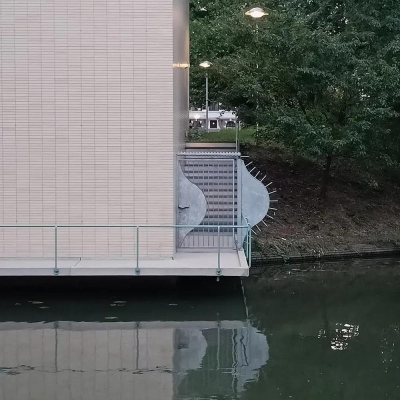
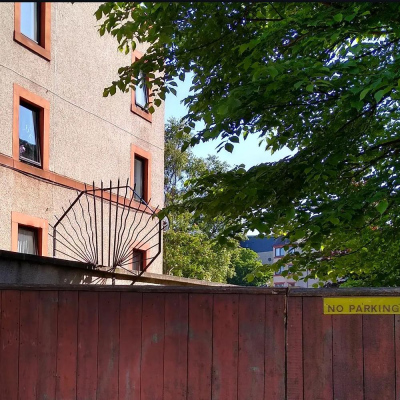
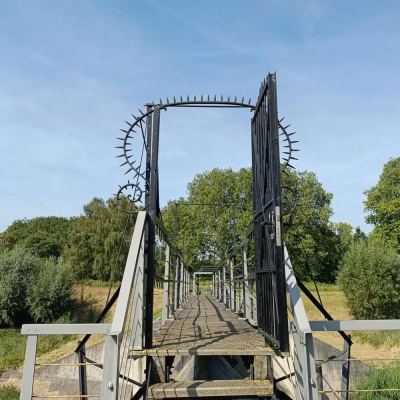
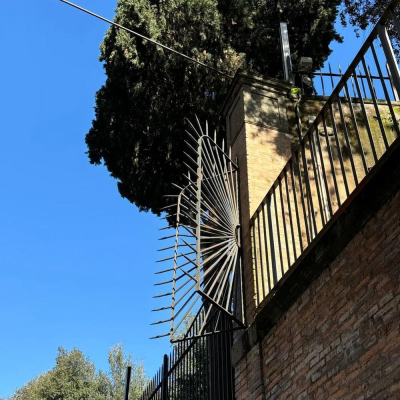
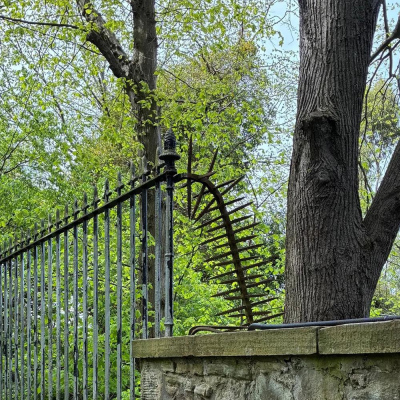
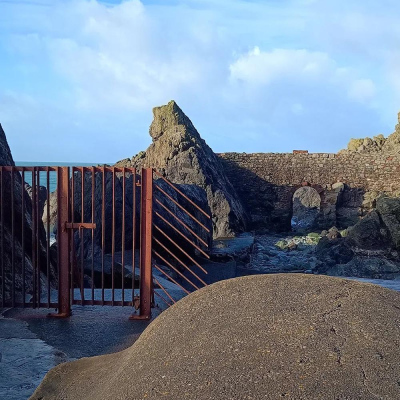
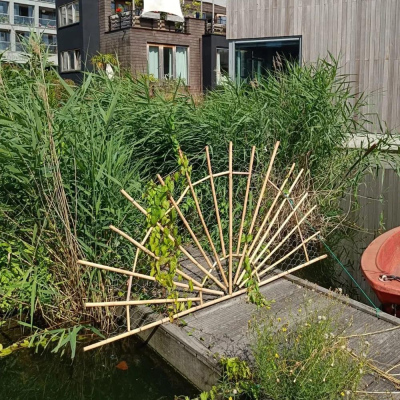
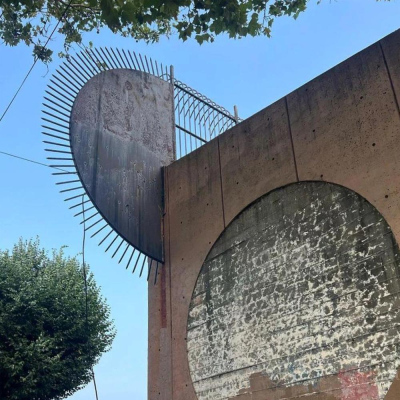
And this is where things start to get interesting. The type of fence that I get very excited about does not simply delimit or keep out. It dares. When I come across a fan fence, I cannot help but wonder why a fence was necessary in that particular location, what sort of movement was it trying to prevent (how difficult would it be?), why was this seen as the most effective or preferred security measure, why some quadrant spikes altogether?
It turns out that fan fences are extremely site-specific. They are commonly custom-made, with no one-size-fits-all. After I inquired about any sort of information fencing experts might have on this particular type of fence, a sales representative briefly responded: “Sorry, but I cannot provide you with a typical detail.” Perhaps it is their obscure character that makes them so rarely sought after and yet so varied. They can be austere or ornamental, perched on a balcony or found in a ditch, a status symbol, an essential piece of deterrence, or mere decoration. They are a form of protective security measure that cares about how it looks – I like to think this is not merely the product of neutralizing security controls, but rather the consequence of a deliberate decision to draw attention.
In a country where discussions about the freedom of movement stretch back at least some eight hundred years (just think of the Enclosures Acts), and where one has become almost accustomed to walking around, not walking across, instances that remind you of the very possibility of walking across are rare. Contrary to the typical layout of a fence safeguarding a precious interior, fan fences are not inward- or object-focused; they draw attention to movement. Whether to cross or not is then, of course, an altogether different question.
(London, December 2019)